
Learn the Facts About
Human Trafficking in Connecticut
Understanding how human trafficking exists in Connecticut is a first step toward preventing it.
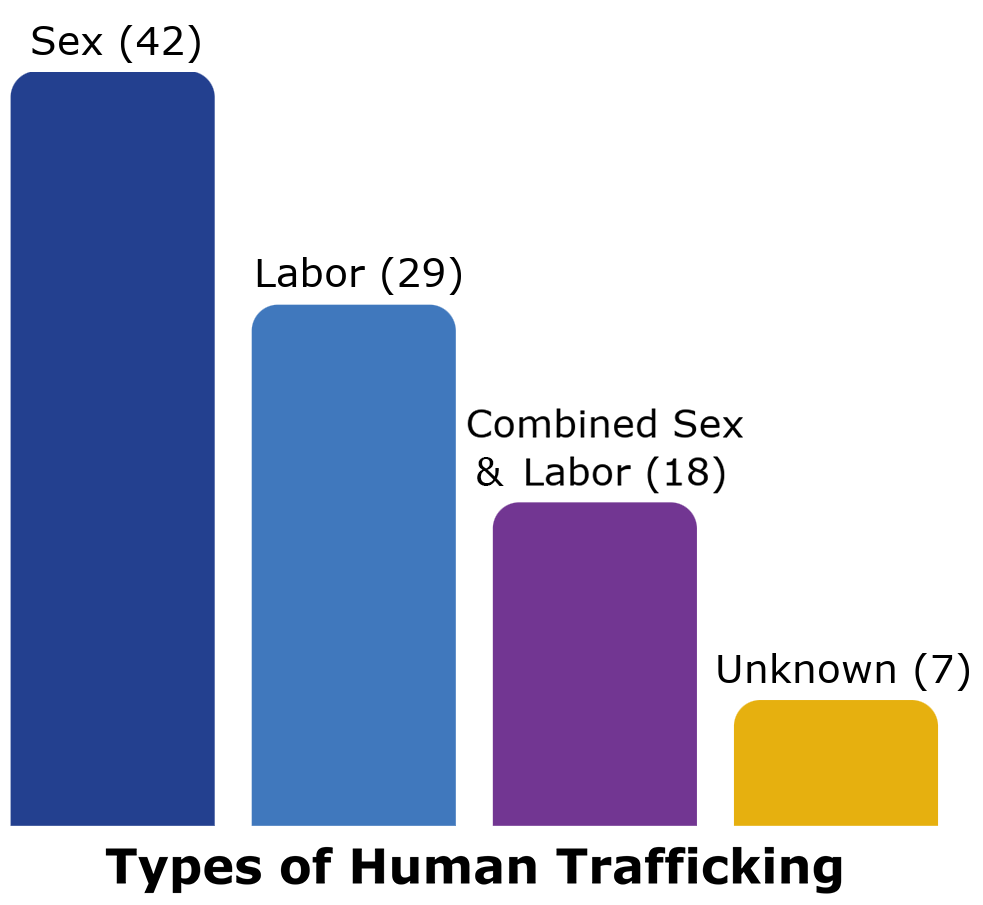
Types of Human Trafficking Cases Reported in Connecticut in 2024
These numbers reflect reported cases, not the full scope of trafficking. Experts widely agree that human trafficking is significantly underreported, meaning the true scale of trafficking in Connecticut is likely far greater than reported figures suggest.
Many businesses encounter trafficking situations without realizing it.
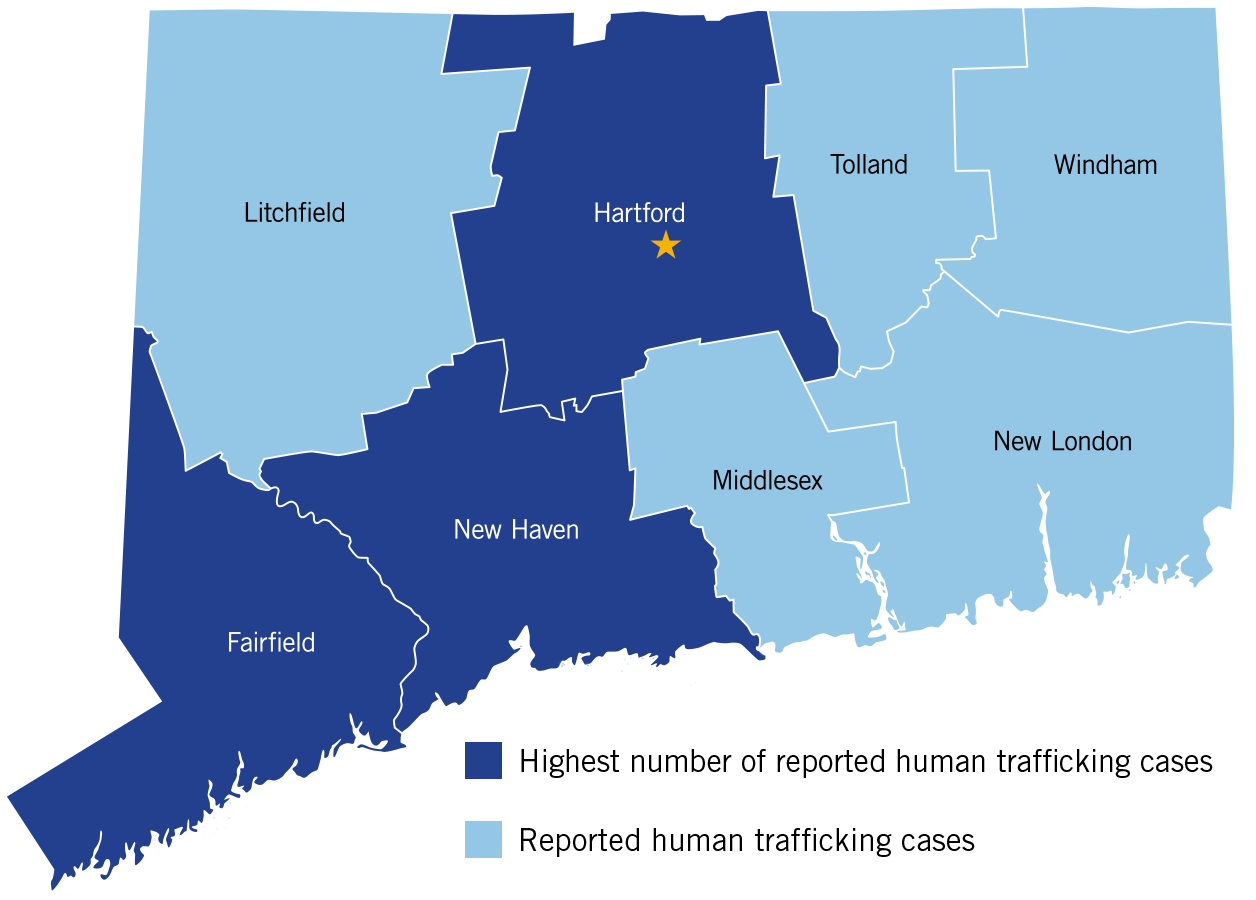
Connecticut Counties with Human Trafficking
Human trafficking has been reported in all eight Connecticut counties, but most cases come from Hartford, New Haven, and Fairfield counties. Experts attribute this to higher populations, major transportation routes, more labor-intensive industries, and better victim identification and reporting. Knowing where trafficking is reported most helps raise awareness and prevent it.
Human trafficking is a serious and often misunderstood crime. Many people assume it only happens elsewhere or involves extreme scenarios that would be easy to recognize. Human trafficking occurs across Connecticut, in both urban and rural communities, and frequently operates hidden in plain sight.
Reports of human trafficking have occurred in every Connecticut county. Since the National Human Trafficking Hotline was established in 2007, 702 reported cases involving 1,393 identified victims have been documented in Connecticut. However, because human trafficking is widely recognized as an underreported crime, these figures likely represent only a fraction of the trafficking that occurs in Connecticut.
Want a deeper look at Connecticut-specific data and trends?
Visit Connecticut Data and Impact to explore additional statistics, trends, and context.
Source: National Human Trafficking Hotline
Connecticut’s Department of Children and Families receives more than 300 reports each year involving young people who may be victims of sex trafficking. The TIP Council has also documented that children of color are disproportionately affected, reflecting broader systemic inequities that increase vulnerability to exploitation.
Work Environments Where Trafficking Has Been Reported
Human trafficking does not occur in a single type of place. In Connecticut, reports of trafficking have involved a range of work environments, including both customer-facing services and labor-based industries. These settings may appear legitimate and routine, which is why trafficking is often overlooked.
Reported settings in Connecticut include:
Illicit massage or spa businesses
Hotels and motels
Online platforms used to advertise commercial sex
Pornography production and distribution
Domestic work conducted in private homes
Restaurants and food service operations
According to the Connecticut Trafficking in Persons (TIP) Council, hundreds of illicit massage businesses may be operating in Connecticut at any given time, making this an area of significant concern for sex trafficking.
Sex Trafficking of Minors in Connecticut
The majority of reported human trafficking cases in Connecticut involve sex trafficking of minors. State and federal data from organizations like the Regionalized Human Trafficking Recovery Taskforce consistently show that children and teens — particularly those between the ages of 10 and 19 — are among the most vulnerable.
Connecticut’s location between major metropolitan areas like New York City and Boston, as well as its placement along heavily traveled transportation corridors such as Interstate 95, increases its vulnerability to trafficking activity. Airports, highways, tourism centers, large events, and labor-intensive industries can also all create opportunities for traffickers to operate.
These cases show how human trafficking has happened in Connecticut across different industries and communities, often hidden in plain sight. For learning purposes, the examples come from reported cases and court records:

Domestic Labor Trafficking
Hartford County | 2025
A Connecticut man received over three years in prison for running a labor trafficking ring that exploited smuggled victims in private homes. Victims were forced to do unpaid housework, yard work, and job duties through coercion and control. The case shows labor trafficking often happens quietly behind closed doors.
Agricultural Labor Trafficking
Statewide | 2024
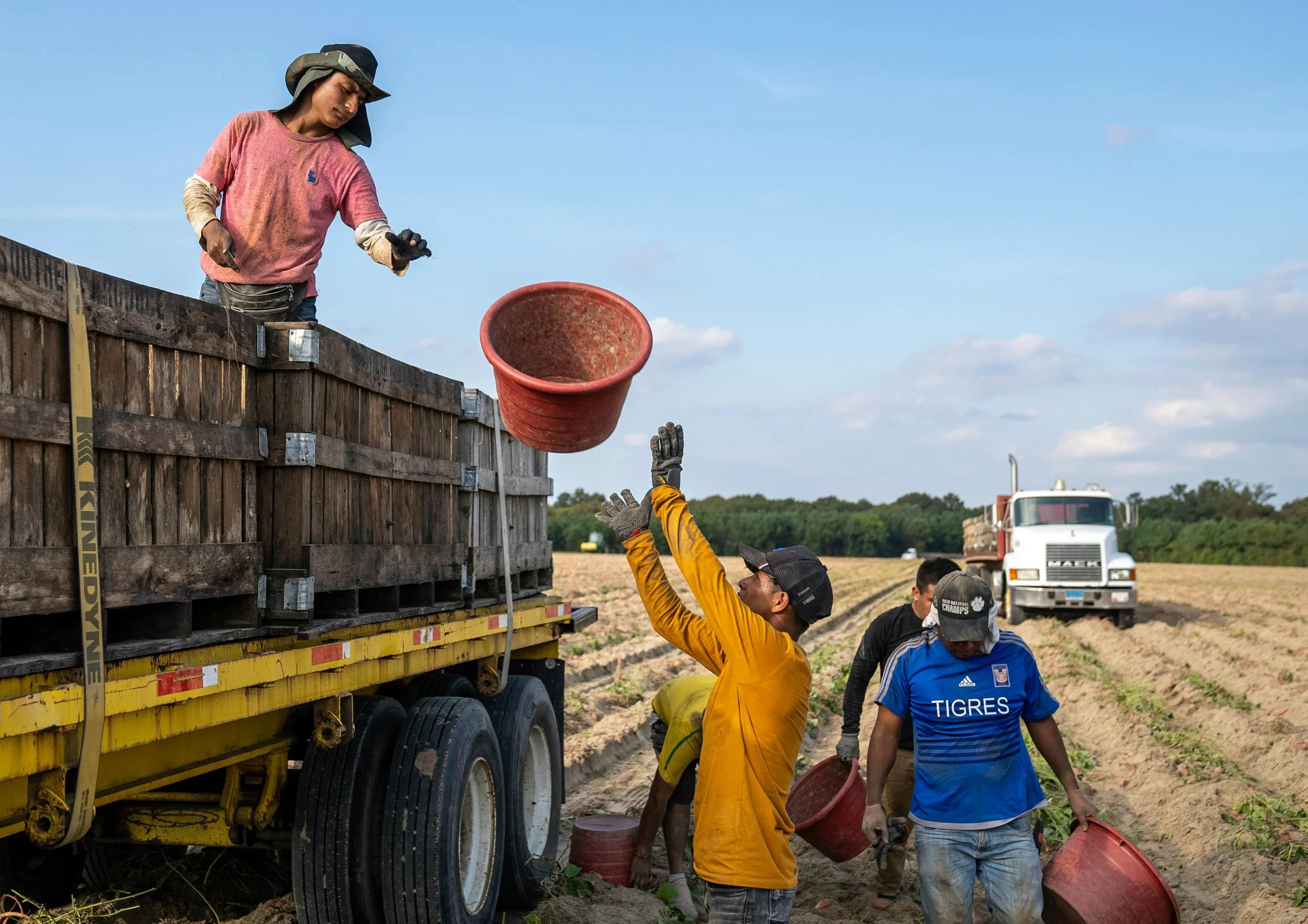
Five migrant workers sued a Connecticut farm and wholesale nursery, saying the employers misused H-2A visas to force labor. The workers say they were charged illegal fees, threatened with deportation, denied pay, kept in overcrowded housing, and barred from speaking truthfully to federal investigators. The case shows how reliance on visas and economic need can be used to exploit and traffic workers.

Sex Trafficking in a Massage Parlor
East Hartford | 2024
A woman’s 911 call revealed a sex‑trafficking ring inside a massage parlor where she’d lived and worked for over a year. She said she was beaten, kept in debt, and forced—along with other women—to perform sex acts. Victims were charged thousands for fake licenses and only allowed tiny tips, keeping them trapped.

Sex Trafficking in a Motel
Milford | 2025
A man was arrested for sex trafficking after authorities discovered a woman being held in a motel room and forced into prostitution. Officials reported that she was closely controlled, deprived of food, sexually assaulted for disobedience, and denied access to the money she earned. The case underscores how traffickers use seemingly ordinary locations to conceal violent exploitation.
State enforcement data further underscores the prevalence of sex trafficking of minors in Connecticut, as does the legislative action taken by the Connecticut General Assembly over the past several years.
The State Office of Legislative Research reported that from 2016 to 2021, the most common human trafficking-related arrests in Connecticut involved offenses such as promoting a minor in an obscene performance and enticing a minor by computer.
Continue Learning
Identify the signs of potential human trafficking
Report safely and responsibly when concerns arise